Care at Hospice
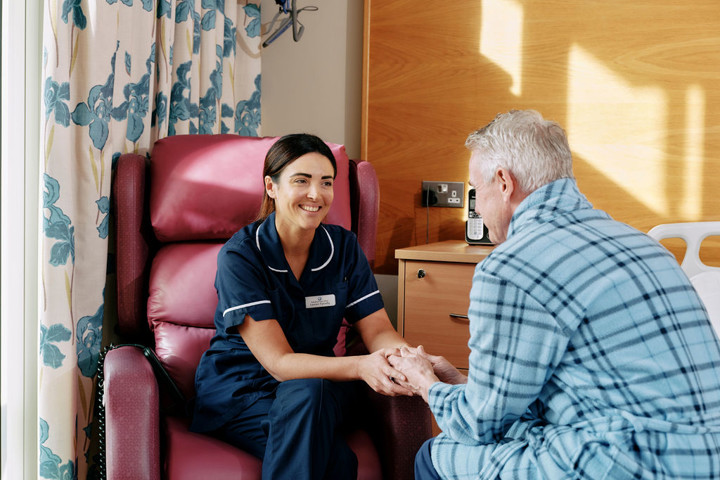
We provide round the clock care on our In Patient Unit, where you can be looked after in a home away from home environment.

We provide round the clock care on our In Patient Unit, where you can be looked after in a home away from home environment.


We rely on the support of the community to enable us to continue caring for patients and to support their families and loved ones. It costs £22,000 a day to run our services. Your support makes a huge difference.

Wednesday 04 Nov 2026
Elisa Da Silva
Back with the second in our ‘day in the life’ series, this time we’re spending the day with the team on the In Patient Unit. Just a reminder on what this series is all about, I’m Elisa, Communications and Engagement Officer working within the Income Generation team at Hospice, and I’m spending time with the various teams that make Hospice what it is and seeing first-hand the work we do and how we do it. My role is all about raising awareness of Hospice and all its services and telling our stories – from the weddings we’ve held to loved ones sharing their experience of Hospice care, and all the moments in between. This one is structured a little differently to the day I spent with the Living Well team (read about that here) as instead of shadowing one person for the day, I spent time with the various teams within the unit, including the doctors, nurses, health care assistants, and the ward clerk. Part 2 focuses on my time with the nurses, health care assistants, and ward clerk (read Part 1 here).
So, come along with me as I pop downstairs and onto the In Patient Unit…
In Part 1, we met the four people staying on the In Patient Unit while doing rounds with the doctors. Before we met each of them, we discussed their case; how they've come to be with us, what care and support they are currently getting, and what we need to discuss with them to make sure they keep getting the best possible care and support (both for the individual and their loved ones).
Nurses
Nurses Karen and Emma take me under their wing next and talk me through an important part of their role – managing syringe pumps. Since it was relatively quiet on the unit, they had time to show me, talk quite in depth about it, and answer all of my questions. These devices release medication(s) typically over 24 hours so there’s a constant stream of whatever the patient might need to manage any symptoms (especially important for pain management). As they’re dealing with controlled drugs, the nurses work in pairs when they’re going through the medications and filling the syringe pumps. There are strict protocols to follow – everything is double checked and signed off before it leaves the dedicated room (which only certain colleagues have access to). Watching them work just showed me the attention to detail involved and the high level of clinical care and precision to make sure each individual patient is getting exactly what they need, when they need it.
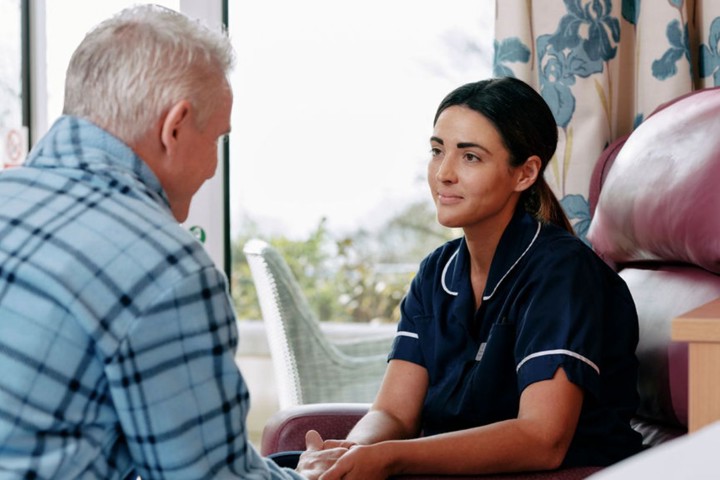
We then delivered the syringe pumps, and I saw Emma and Karen work together to check in on the patient, change over the pumps, and make sure everything happened seamlessly. I couldn’t help but think how reassuring it is for the family to know that their loved one is being so consistently taken care of that all they need to worry about is spending that precious time together. That’s actually one of the main comments I hear from loved ones when they share their stories with us – how they get to just be their partner/daughter/brother again. It’s this specialised care and support that creates the space for patients and their loved ones to have those moments that really matter in those final days or weeks.
Ward Clerk
After lunch, I went back onto the unit and sat down next to Angie, one of the first faces welcoming people onto the In Patient Unit. Angie is one of our two Ward Clerks (we also have the lovely Karen), providing administrative support to the unit and just generally being a friendly face for visitors and colleagues alike. She told me they start their day checking for any new admissions or potential incoming admissions and familiarise themselves with patients and visitors. This means Angie will know who’s in which room and who might be coming in to visit them, if someone has come in overnight, and whether we’re expecting anyone to be admitted that day. Angie (or Karen) will often greet loved ones during admission, particularly if the nurses and health care assistants are busy with patients.
We also go through the list of visitors for each patient – this sets out who is allowed to visit and any restrictions or requirements around that. It could have a note that says, ‘always welcome’, or ‘check with patient before allowing in’, or ‘no visitors after 22:00’ etc.
Being an administrative role, Angie has lots of paperwork to go through, which we started doing together. One of those is a feedback form they give to patients after they’ve been in for a couple of days. We ask for them to share their experience – whether it’s positive or constructive – and give the space to ask any questions they may have about their care or raise any concerns. All of this helps us shape patient care and know what we’re doing well or what could be improved. Sometimes it could be a small or simple idea that makes a difference. For example, a feedback comment we recently received mentioned having a space on the unit where visitors could work remotely. Turns out, we do have a room that can be adapted to do so, so the team now make sure visitors know that it’s an option, and work with our facilities team to make the space suitable when people need to work from it.
Health Care Assistants
The last part of my day I spent with Kerry, one of the many fantastic health care assistants that work in the unit. Kerry and I have been at Hospice for around the same length of time – three years – and in that time we’ve been involved in weddings, birthdays, and created videos and photoshoots for Hospice together. Basically, when Kerry sees me coming, she rolls her eyes and asks, “what do you want now?” – in jest of course, because she’s always a good sport and gets involved. This time, she was thrilled to see there was no camera in hand, and instead I’d be writing about what we did that afternoon. So off we went down the hallway to check on our patients.
A big part of Kerry’s role is helping patients with activities we do in daily life – personal hygiene, eating/drinking, moving around, and general comfort. As mentioned, she keeps an eye on which patients need moving at what times – there’s a schedule they stick to to make sure anyone with limited mobility is comfortable and won’t develop pressure sores from lying down in the same position for too long. To move anyone, they work in pairs – I’m not trained so I stand back and we chat while they do this. We also have equipment in each room to help if it’s needed. Sometimes it might just be a pillow fluff and grabbing an extra blanket. We checked in on Jemma*, who was keeping herself busy with arts and crafts in the family room (this is a shared space on the unit designed similarly to a living room where people can spend time) and gave her an extra blanket.
We then popped in to see Alan*. The main item on the agenda – getting his war films on! He was in quite a chatty mood, so we spent some time with Alan. I talked to him while Kerry was logging into Netflix again, occasionally joining in the conversation. Alan told me a bit about his childhood and his working life and asked me about my work at Hospice. You could just tell he’s always been a charmer and definitely enjoyed chatting to the ladies. Kerry got a war film on for him and he was thrilled, so we said our goodbyes and left him to it.
That was the end of the day for me. As I was packing up my things, my colleagues said I have to come back and do another day when the unit is busier so I can see what it’s like when it’s a fuller house. I was already knackered from my day with them, so I can only imagine what it must be like when you have more people in! It was a great experience spending the day on the unit, seeing my incredible colleagues in action and learning more about what they do and how they do it. The kindness, care, and joy they bring to those staying with us and their loved ones is truly special. I’m honoured to work with them all.
*All patient names are changed to protect their privacy