Care at Hospice
We provide round the clock care on our In Patient Unit, where you can be looked after in a home away from home environment.

We provide round the clock care on our In Patient Unit, where you can be looked after in a home away from home environment.


We rely on the support of the community to enable us to continue caring for patients and to support their families and loved ones. It costs £22,000 a day to run our services. Your support makes a huge difference.

Tuesday 03 Nov 2026
Elisa Da Silva
Back with the second in our ‘day in the life’ series, this time we’re spending the day with the team on the In Patient Unit. Just a reminder on what this series is all about, I’m Elisa, Communications and Engagement Officer working within the Income Generation team at Hospice, and I’m spending time with the various teams that make Hospice what it is and seeing first-hand the work we do and how we do it. My role is all about raising awareness of Hospice and all its services and telling our stories – from the weddings we’ve held to loved ones sharing their experience of Hospice care, and all the moments in between. This one is structured a little differently to the day I spent with the Living Well team (read about that here) as instead of shadowing one person for the day, I spent time with the various teams within the unit, including the doctors, nurses, health care assistants, and the ward clerk. Part 1 focuses on my time with the doctors. So, come along with me as I pop downstairs and onto the In Patient Unit…
The day started with a morning meeting involving clinical management, doctors and nurses from the In Patient Unit, and the community teams. We got together to discuss what’s happened over night – any changes regarding patients, if anyone new has come into our care (this is where it often overlaps with the community teams, as some patients may initially be supported or cared for at home or in a care/residential/hospital setting, and then decide to spend their final days/weeks on the unit), and any information that might be useful for the teams to know.
Doctors
I stayed with the doctors to begin their rounds. This was led by Dr James Grose, Consultant for Palliative Care Services, and joined by Dr Kieran McFarlane, junior doctor (foundation year two), and Adam Right, 5th year medical student. Before seeing each patient, they meet with the nurse in charge of their care to discuss how the patient is doing, any changes in treatments and/or symptoms, and so on. This started with John*. We discussed his condition – they recapped for us what led to him being in end of life care, talked about his symptoms and pain management, and in John’s case, the other organisations we’ve been working with outside of Hospice that has been supporting him throughout his illness. Dr James then asked Dr Kieran and Adam about how they’d assess and treat the patient – he quizzed them about his condition, any side effects/symptoms that come with it and how they’d manage them, and what kind of questions they should ask John to get an update on how he’s doing and how they can provide the best tailored care for him. It was really interesting to see the hands-on teaching process at Hospice, and how our team is helping to shape the next generation of palliative and end of life care doctors.
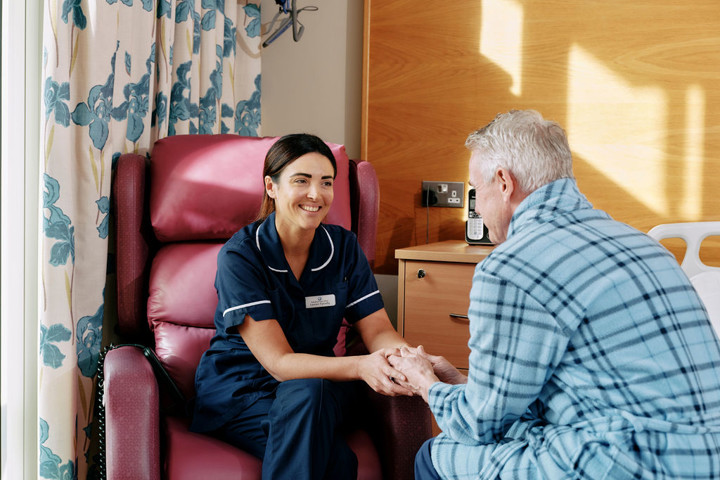
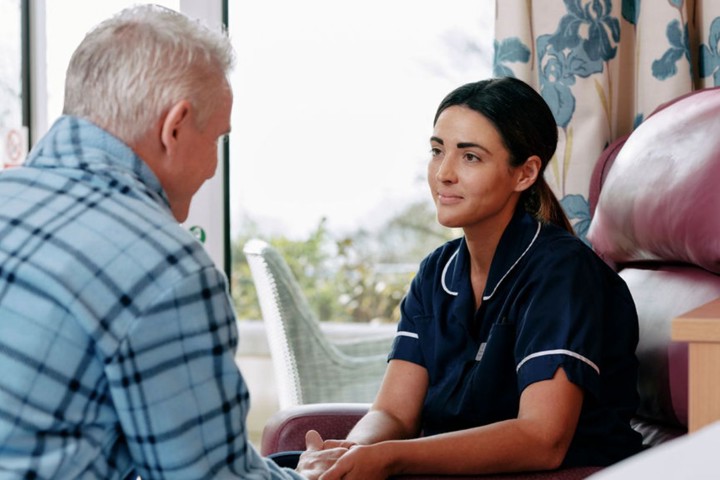
Then we went to see John. We said hello, introduced ourselves to him and his wife – who was perched on one of the comfy sofa chairs next to his bed – and Dr James sat down with the two of them to begin. He asked John how he was doing, if there were any changes to his symptoms, if he was in any pain, or had any issues we could help manage. John answered all his questions, with Dr James noting anything that might need adjusting to keep him comfortable. They then had some questions for Dr James, which was focused on the progression of his disease. John asked how rapidly he’ll deteriorate, as he already had some changes happen fairly quickly that affected his mobility, and wanted to know if it would continue happening at a faster pace from now on and what that might look like over the coming days. It was interesting to hear how Dr James responded, and quite touching. His response was clinical yet compassionate. He was clear and direct about what was likely to happen – striking the balance between telling them what they need to know and understand about what could happen and how it might affect him, while saying it in such a considered way that’s kind and caring, and reassured them on how we’ll help him manage those changes. They also asked about final moments. Dr James talked about the myths surrounding dying – how many people think they’ll experience a sudden burst of pain or exacerbation of other symptoms – and reassured that this is not the case, and they’ll provide care right until the final moment. Dr James wrapped up their conversation with a summary of changes to his treatment plan, and anything else they may need support wise.
We said our goodbyes and left the room, going back to the nurse’s hub to discuss who we’d be seeing next. Dr Esme Girdwood, Staff Grade Doctor, joined us.
Alan* came into the In Patient Unit around two months ago for end of life care but has since improved and become stable enough to be discharged, either home, or to a care home. You might be thinking, “how does that happen?” but it’s not entirely uncommon for people to come into Hospice in their final stages and come out of that point. Typically, this is seen when someone isn’t in end of life due to their palliative condition, but more likely because of other things such as frailty. For Alan, he’d come to the Hospice after being quite poorly from infection and frailty and got to a point where palliative care was necessary. After spending time on the unit – in a peaceful environment, receiving specialised care from our team, regaining his appetite, and getting clear of infection – he got well enough that he was assessed as no longer being in his final days or weeks. We had quite a light-hearted chat with Alan – he was looking forward to watching some war films that afternoon once Netflix was back up and running! – where Dr James checked how he was feeling and if any symptoms had come back or if there were any other issues, and what the next steps would be regarding him being discharged.
We went back to the hub to talk about our next patient, Jemma*. Jemma has a more complicated health history – beyond her palliative condition – so we spent time going through it before going to see her. This is part of the holistic approach our team take – you have to consider all of the factors of the individual in order to provide the best, tailored care for that person. Jemma is also the second patient on the unit at the moment that will eventually be discharged, as she’s not in the final stages of life. She’s come in for symptom and pain management (another common reason people might come to Hospice but not stay). As part of Jemma’s personalised care, only a few people could go into the room while Dr James had a chat with her to check on her symptoms and how she’s feeling. The team always do everything in their power to respect an individual’s needs and wishes, without compromising on providing the best possible care.
Malcolm* was the last patient we went to see (this is quite quiet for the unit according to the team – four patients on site). Malcolm’s situation was the opposite to the previous two. He’d initially come to Hospice for symptom management, but his condition progressed and he was now considered to be in his final days. We went in to speak to Malcolm, but he was sleeping, so Dr James approached his spouse and asked if they can chat in the meantime. He asked her about how he’s doing and if there are any issues he can help with and talked more broadly about the family being supported too. While they’re talking, the son enters the room, and Dr James continues to discuss any possible needs for Malcolm and the family, including spiritual care (this may include religious or faith support, or discussions around meaning, purpose, identity, connection, and emotional well being). As part of the conversation, Dr James gently tells them that Malcolm is close to the end of his life and checks they understand what to expect over the coming days.
We go back to the hub where I spent time with Dr Kieran and Adam, charting and updating paperwork and admin relating to the patients. This includes formally noting any changes in symptoms and management of medications.
*All patient names are changed to protect their privacy